
The Achilles Tendon From Strain to Rupture
The cord at the back of the heel is the Achilles tendon, and trouble there runs from a strained tendon to a torn one. The warning comes first. AAOS OrthoInfo says Achilles tendon rupture typically results from a sudden injury. Cleveland Clinic says Achilles tendinitis, if untreated, can lead to an Achilles tendon rupture.
What the two statements mean for a sore heel
Put the two statements together and a sore Achilles stops being something to wait out. A sudden injury can bring a rupture on its own, and a slow-building soreness is not always a safe place to stop paying attention.
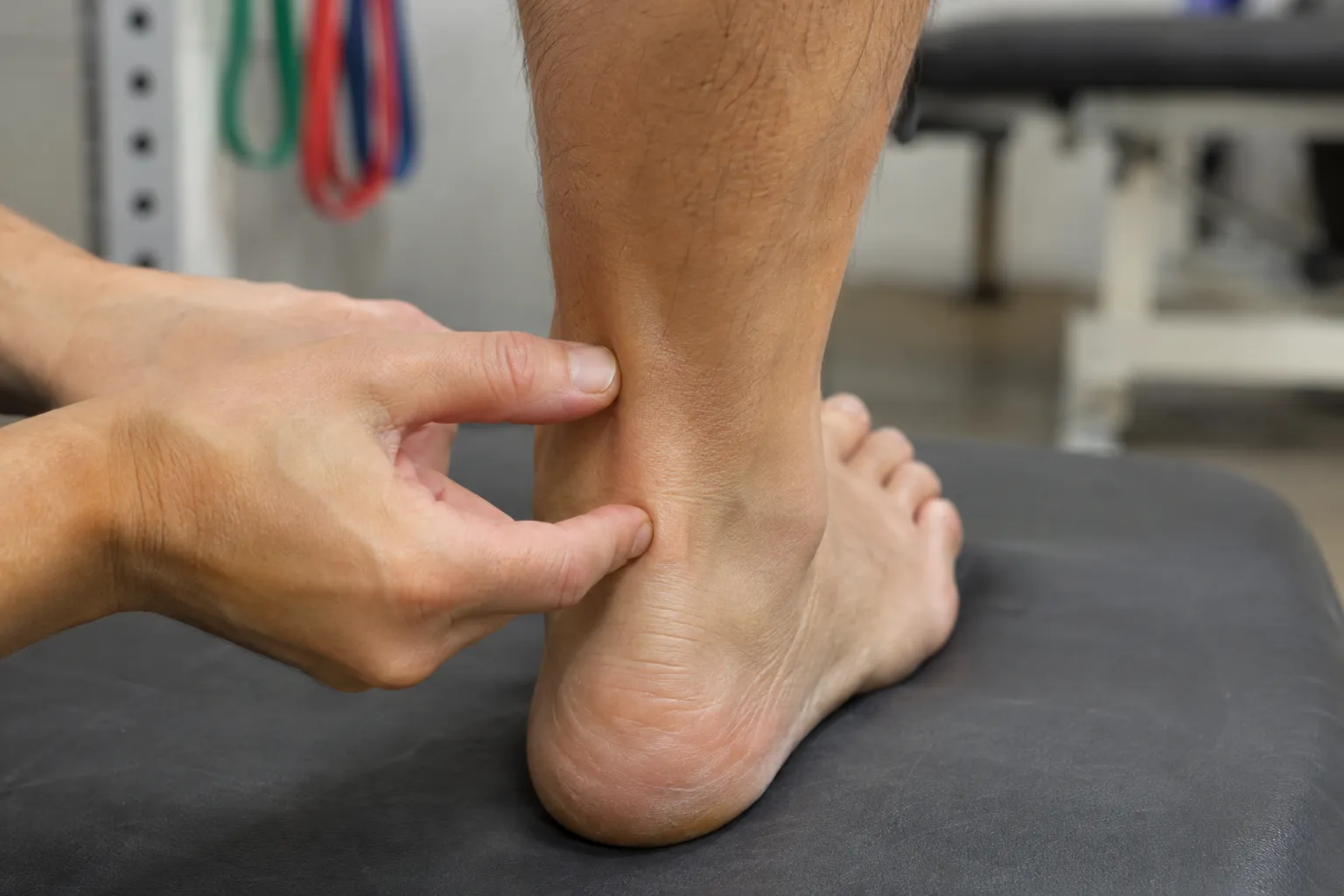
This site therefore sets a conservative line. A pop, a sudden loss of push-off, or soreness that keeps returning each deserve an examination, and none is a reason to keep training and see how it feels.
Pick the article that fits your situation
- Achilles Tendinitis in People Who Run and Play is for the soreness that builds with running or play and has not yet become a tear.
- Signs the Achilles Has Snapped is for the sudden event, and it is the page to read first if you felt a pop.
- The Risk of Tearing a Repaired Achilles Again is for the athlete who has already been through an Achilles repair and wants to know what a second injury would mean.
Reading on rupture and recovery
Several outside sources cover a rupture in detail. The AAOS OrthoInfo page on Achilles tendon rupture and the HSS page on symptoms, treatment and recovery are good places to begin. For more depth, there is a PMC paper on the mechanisms of injury, principles of rehabilitation and return to play. Readers who want a rehabilitation leaflet can see Achilles tendon rupture rehabilitation from University Hospitals Plymouth NHS Trust.
If this injury does not settle
If the pain turns out to sit in the foot or the outer ankle and not the heel, the neighboring hub is Common Foot and Ankle Injuries in Sports.